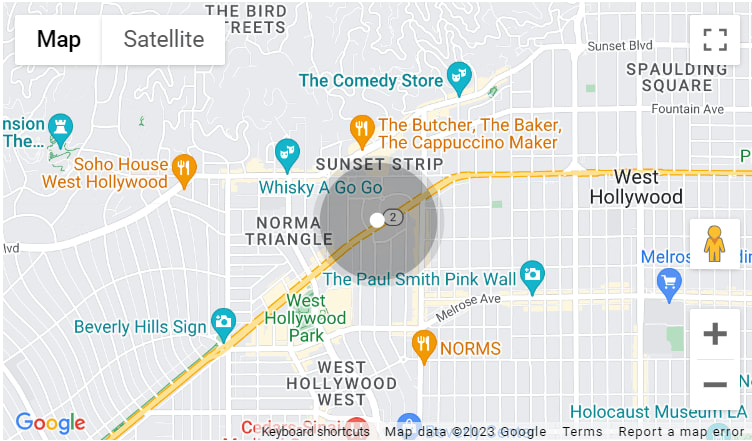
In its 2026 notice to homeowners, the board overseeing Gale Ranch's master association noted it would "discontinue the dues credit" that had briefly lowered bills the year before. The annual charge landed back at $205.00 per home, an amount that has barely moved in years and reads, on paper, like one of the cheapest master HOAs in the Tri-Valley.
A few miles away in Windemere, there's no equivalent bill to open at all. No single master association sends a yearly invoice to every homeowner. For a buyer comparing the two communities side by side, the paperwork tells a clean story: Gale Ranch costs $205 a year to belong to, Windemere costs nothing. That story is incomplete in a way that matters more than the HOA line item itself.
Two Communities, Two Ways of Being Governed
Gale Ranch and Windemere both sit inside San Ramon's Dougherty Valley, both were built out through the 2000s and 2010s, and both feed into San Ramon Valley schools. The way each is governed diverges sharply once you look past the entrance sign.
Gale Ranch runs on a single master structure. The Communities of Gale Ranch Owners Association covers seven neighborhoods, Avanti, Belvedere, Coronado, Gallery, Monarch, Solaire, and Terravista, under one board and one annual bill. That board also flags a separate layer worth knowing about: the Dougherty Valley Geological Hazard Abatement District, a public entity managed by the City of San Ramon that's responsible for the open-space hillsides surrounding the community. It isn't part of the $205 HOA charge. It's a different line, run by a different body, and it exists specifically because those hillsides need long-term monitoring that a standard HOA budget wasn't built to cover.
Windemere skips the master layer entirely. Governance happens at the level of small sub-associations tied to specific tracts, mostly the attached-home clusters that share a pool or a stretch of private landscaping. One documented example of these sub-HOA dues runs about $155 a year for a small tract, a number in the same range as Gale Ranch's master fee, just collected differently and by a smaller, more local board. A single-family home on a standard Windemere street may not carry any HOA at all.
So the fair comparison isn't "$205 versus zero." It's two different governance shapes, one centralized and one fragmented, that happen to produce roughly similar numbers when you actually track down what each parcel pays.
The Charge That Isn't on the HOA Statement
Neither of those numbers is the one that moves the needle on a monthly payment. That's the Mello-Roos special tax, and it shows up on the county property tax bill, not the HOA statement.
A Community Facilities District, the formal name behind Mello-Roos, is a bond-financed zone drawn around new development to pay for the roads, parks, and public safety infrastructure a builder didn't fund outright. The tax sits outside California's Proposition 13 cap, because it isn't based on the home's assessed value. It's a flat, parcel-specific charge set by the bond documents, and it can escalate on its own schedule regardless of what the market does to your home's price.
In San Ramon, this charge concentrates almost entirely in the Dougherty Valley footprint, meaning Gale Ranch and Windemere both carry it, sometimes stacked as more than one overlapping district on a single parcel. Older, pre-2000s San Ramon neighborhoods closer to the city's original core typically don't carry it at all. The HOA fee tells you which governance model you're buying into. It tells you almost nothing about whether you're also carrying a CFD, how many, or what they add up to.
| Gale Ranch | Windemere | |
|---|---|---|
| Governance | Single master HOA across 7 neighborhoods | Small sub-HOAs by tract, no master |
| Visible annual due | $205 (2026) | Varies by tract; one documented example is $155 |
| Additional layer | Dougherty Valley GHAD (hillside oversight) | None reported at master level |
| Mello-Roos / CFD | Present on many parcels; verify by APN | Present on many parcels; verify by APN |
| Where the real number lives | County property tax bill, not HOA statement | County property tax bill, not HOA statement |
Why the City Built It This Way
This isn't a quirk unique to these two communities. It's the mechanism San Ramon itself argued for in court. In Building Industry Association of the Bay Area v. City of San Ramon, decided in 2016, the city had run its own cost analysis and found that providing police, parks, recreation, open space, landscaping, and street services to new residential development cost more than the base property tax revenue that development generated. The city conditioned approval of new projects on forming a citywide facilities district to cover the gap. The developer's industry group challenged it, arguing the tax simply replaced services the city already provided. The appellate court disagreed, finding the new district financed services that were, in the court's words, "in addition to" what existing taxpayers already funded.
That ruling is the reason new-build San Ramon looks the way it does on a tax bill. The base 1% rate was never going to fully cover what Dougherty Valley's roads, parks, and public safety demands actually cost, so the city built a second, uncapped charge to close that gap and applied it specifically to the newer development generating the added demand. Older San Ramon neighborhoods, built before this financing tool was common, mostly never had the district formed under them.
The Number That Actually Moves Your Monthly Payment
Because the CFD charge is parcel-specific and can stack, there's no single figure that applies evenly across either community. A listing's HOA field might show $205 or $155 and still leave out a special tax that adds several hundred dollars a month once you divide the annual CFD amount by twelve and add it to the mortgage math a lender will already be running. Local reporting on San Ramon's planned communities has pointed to combined HOA and CFD carrying costs across Gale Ranch, Windemere, and greater Dougherty Valley running well into the hundreds of dollars monthly beyond what a listing's headline price suggests, a figure that doesn't surface on a quick portal search and isn't always volunteered before you're deep into a transaction.
The only way to get the real number is to pull it yourself, per parcel. That means requesting the current county property tax bill for the specific address, looking for a line labeled Mello-Roos, Special Tax, or CFD, and confirming the total against the preliminary title report before removing contingencies. HOA disclosures matter too, but they answer a different question: what you're paying for shared amenities and who governs the tract. The tax bill answers what you're actually carrying every month, and it's the one document that doesn't change depending on which sign you drove past into the neighborhood.
Before You Write the Offer
If you're comparing a Gale Ranch listing to a Windemere listing, or either to something in an older, non-Dougherty Valley part of San Ramon, treat the HOA fee as one line among several rather than the total picture. Ask for the CFD's Rate and Method of Apportionment, the document that spells out how the special tax is calculated, whether it escalates annually, and when the underlying bonds are scheduled to be paid off. A district with a handful of years left on its bonds carries a very different long-term cost than one just getting started.
Does Windemere really have no HOA at all? Not at the master level. Individual tracts, particularly attached-home clusters with shared pools or landscaping, run their own small sub-associations with their own modest dues. Single-family sections may have no HOA whatsoever, which is part of why the community reads as less encumbered than Gale Ranch on paper.
Does the Mello-Roos charge ever go away? Yes, once the bonds backing the district are paid off, which is set at formation and varies by district. Some CFDs also allow prepayment of your share of the remaining balance, though the terms for that are specific to each district's bond documents.
Should I assume every newer San Ramon neighborhood carries one? No. The charge concentrates in Dougherty Valley, where Gale Ranch and Windemere sit. Older sections of San Ramon built before this financing tool became standard typically don't carry it, which is exactly why the parcel-level check matters more than the neighborhood name.
If you're weighing a move between Gale Ranch, Windemere, or an older San Ramon street that carries neither the HOA structure nor the CFD, Connections Real Estate Team can walk the actual tax bill and title report with you before you write an offer, not after.